When Restoration Is Not Enough
Flat Roof Replacement in Springfield, MO
Plan a replacement based on the condition of your existing roof. Get a Free Estimate
When Restoration Is Not Enough
Plan a replacement based on the condition of your existing roof. Get a Free Estimate
Restoration can be a practical way to extend roof life, but not every roof should be restored. Extensive moisture, widespread membrane failure, deteriorated decking, repeated leak history, incompatible layers, severe storm damage, or an aging assembly that has reached the end of useful service can make replacement the better long-term decision.
Flat roof replacement involves more than choosing a new surface. Existing layers, insulation, decking, drainage, flashing, rooftop equipment, penetrations, roof edges, access, and building use all affect the scope. Our goal is to help property owners understand why replacement is being considered and what conditions should be addressed while the roof is open.
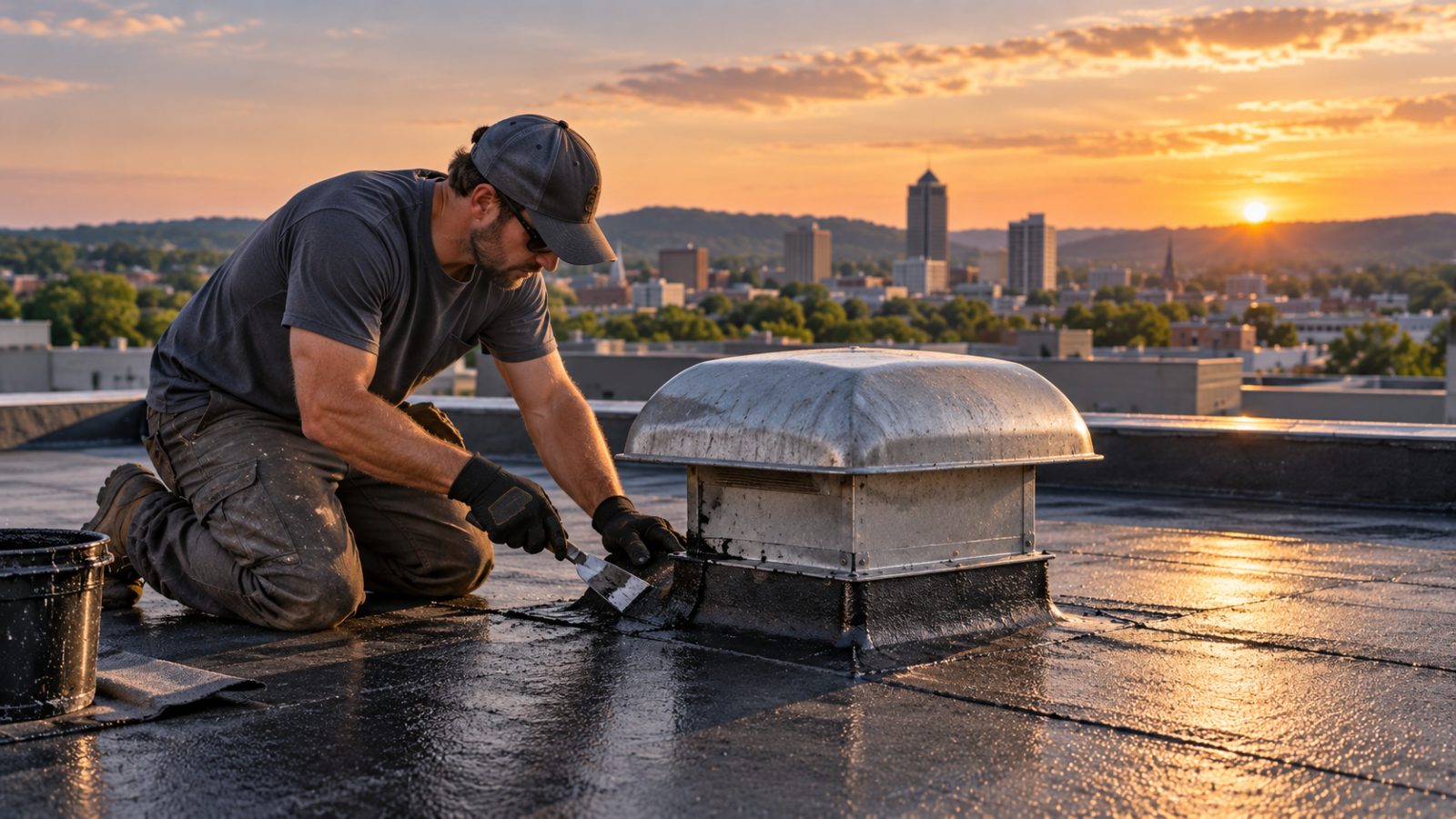
Replacement scopes vary by building, existing roof assembly, and the new roofing system selected.
The current roof is reviewed for visible deterioration, moisture-related concerns, deck condition indicators, drainage issues, and details that may affect tear-off or installation.
Where required, existing roofing materials are removed so damaged components can be identified and the new system can be installed over a suitable substrate.
Wet insulation or deteriorated substrate may need to be removed and replaced. Conditions found after removal can affect the final scope.
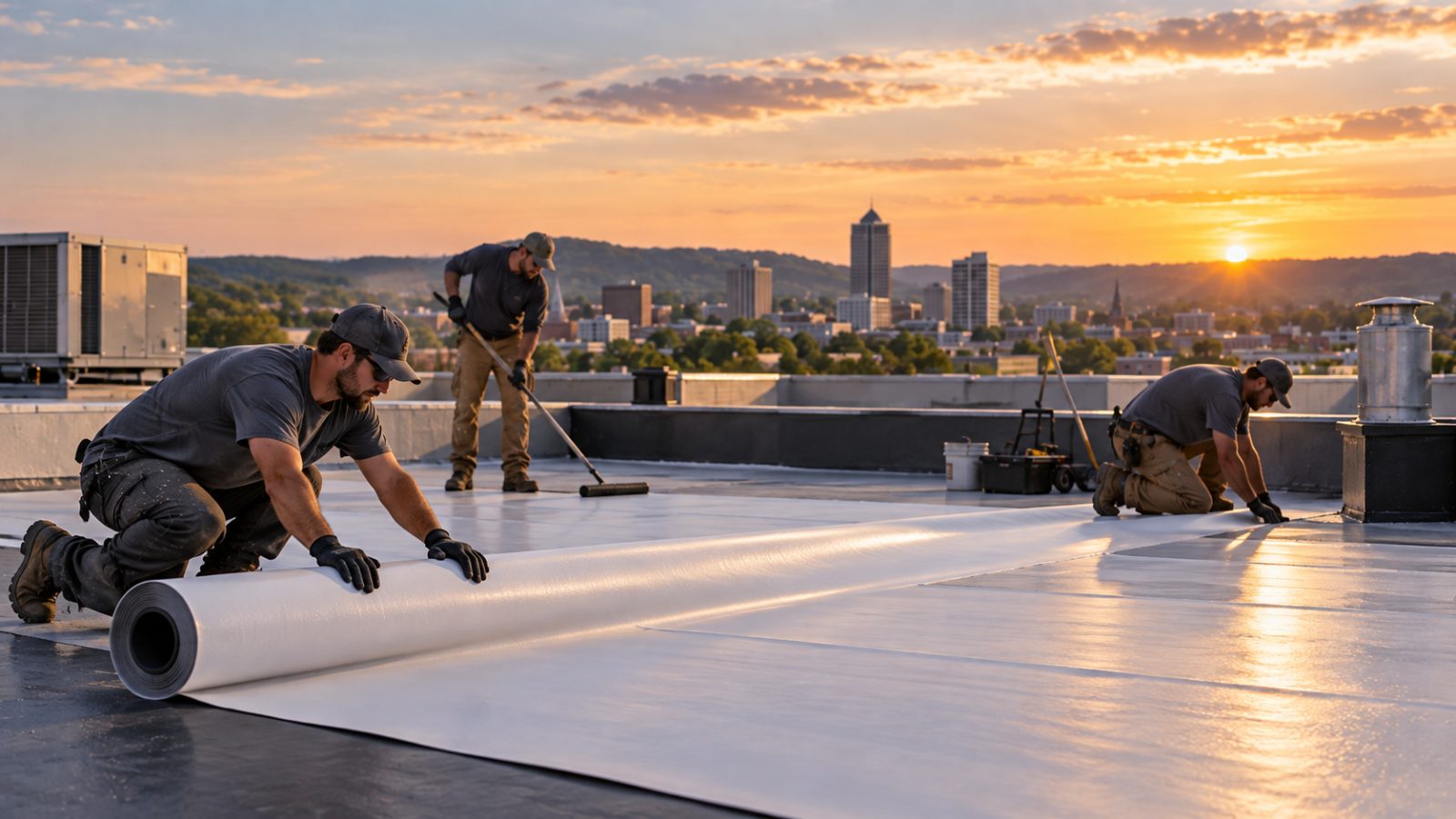
A compatible low-slope roofing system is installed with attention to seams, transitions, fastening or attachment, and weather protection.
Edges, curbs, walls, drains, penetrations, and transitions receive detailed attention because these areas are critical to long-term performance.
| Service | Estimated Cost | Average |
|---|---|---|
| Basic low-slope replacement | $8-$16 per sq. ft. | Varies by system |
| Replacement with significant tear-off | $10-$20+ per sq. ft. | Condition dependent |
| Deck or insulation replacement | Additional cost | Based on discovered conditions |
These are broad planning figures only. Roof assembly, tear-off requirements, insulation, deck repairs, access, drainage, penetrations, material choice, and project size can materially change pricing.
Because restoration is central to our work, replacement is not our automatic recommendation for every aging roof.
We consider drainage, penetrations, insulation, decking, flashing, and transitions as part of the replacement scope.
We explain conditions that may affect pricing or scope once existing roofing materials are removed.
The roof type should fit the building, use, exposure, drainage, and maintenance expectations rather than being selected by name alone.
If repairs keep returning or the roof is broadly deteriorated, replacement may provide the clearer long-term path.
Free — no obligations

We review the existing roof and the reasons replacement is being considered.
We outline removal, substrate, insulation, new roofing, flashing, drainage, and detail requirements.
Project access and roof areas are prepared for removal and installation work.
Existing materials are removed as required, and discovered substrate issues are addressed within the agreed scope.
The new roofing system and related flashing details are installed.
The completed roof is checked and maintenance considerations are discussed.